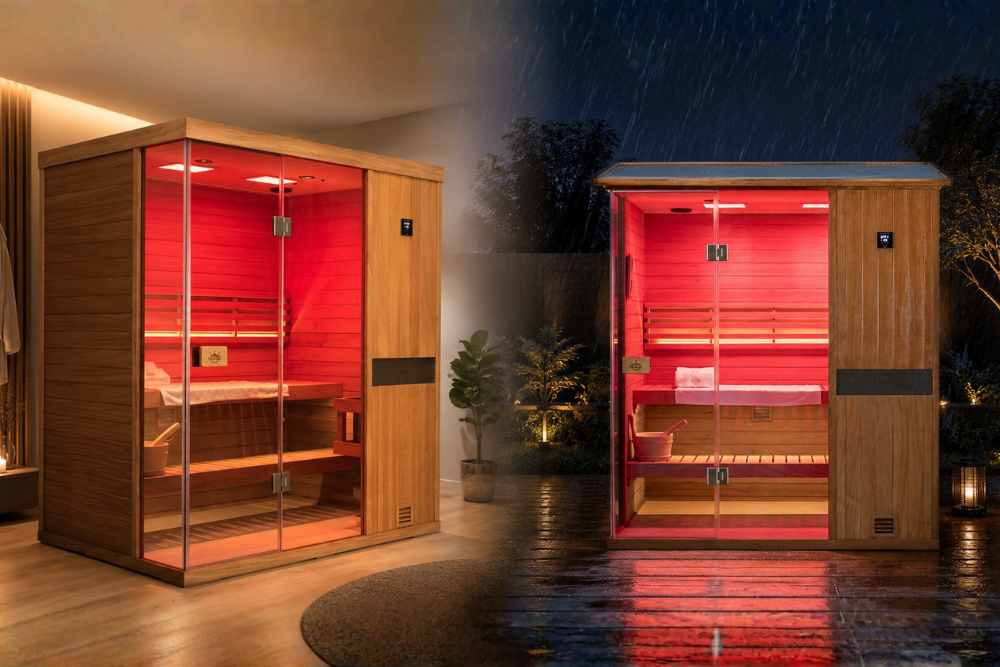

Heat is medicine. Space is how you administer it.
When you decide to bring clinical-grade thermotherapy into your daily routine, the physical dimensions of your cabin dictate the quality of your recovery. Buy a unit that is too small, and you restrict your body’s ability to stretch and decompress. Overestimate your spatial needs, and you waste valuable energy heating empty air.
Choosing the exact dimensions for your home wellness sanctuary is a precise calculation. It requires looking beyond the basic "seat count" on a specification sheet and mapping out your physical movement, your home's infrastructure, and your long-term cellular health goals.
Here is how to architect the perfect fit.
The "Seat Count" Myth: Buying for Movement
Most manufacturers size their units by the number of adults who can sit upright side-by-side. But let's look closer. Human bodies in recovery require movement. Whether you are dealing with joint stiffness or seeking deep post-workout muscle relaxation, your biological footprint changes when you stretch.
The 1-Person Cabin: The Focused Minimalist If your floor plan is highly restricted—such as a downtown condominium or a dedicated corner of a home gym—a single-person unit provides a highly efficient thermal envelope. The space heats up rapidly, retaining a dense, concentrated atmosphere perfect for solo meditation and targeted heat exposure.
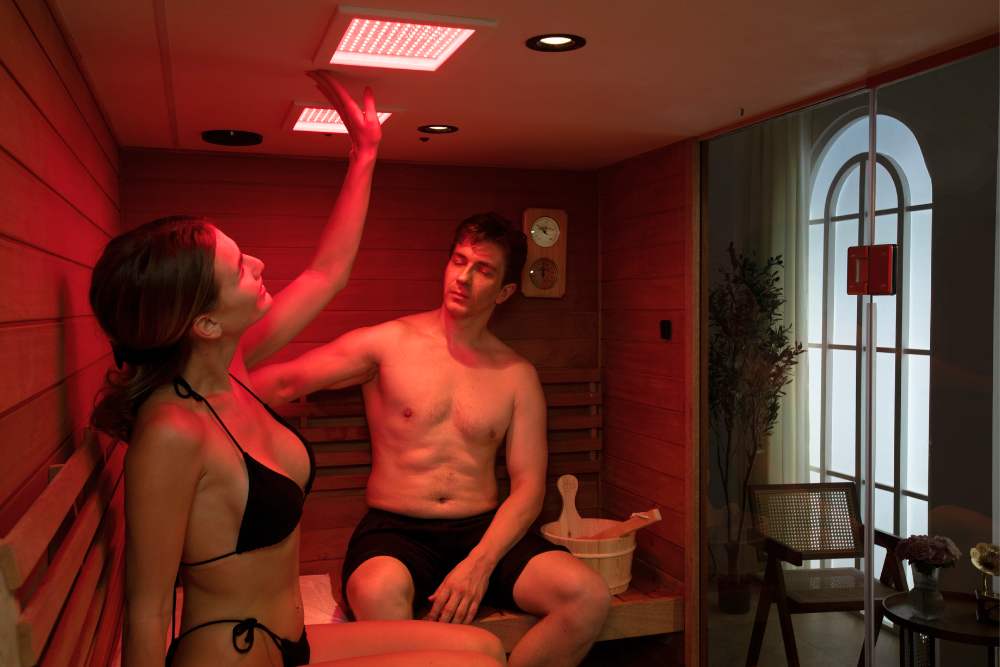
The 2-Person Cabin: The Strategic Sweet Spot This is the undisputed benchmark for the modern home. Why? Because a two-person capacity actually functions as an elite one-person recovery suite. If you are a solo user over the age of forty, you know that lower back and hamstring relief requires extending your legs across the bench. A two-person footprint gives a single user the luxury of horizontal stretching, while still accommodating a partner comfortably when needed.
The 3- to 4-Person Cabin: The Social Wellness Hub Designed for families or expansive home spas. If you plan to lie down completely, or if you regularly share your thermal therapy protocols with a spouse and friends, you need volume. Keep in mind that heating a larger air mass requires a dedicated electrical infrastructure.
Blueprinting Your Installation: The Physical Reality
Before you select a traditional sauna or a modern vapor-rich unit, you must map the physical realities of your property. Do not buy off floor space alone.
Take these exact measurements into account:
- Ceiling Clearance: Heat rises. A proper steam sauna utilizes vertical airflow to distribute humidity evenly. Ensure you have at least a few inches of clearance between the top of the cabin and your room's ceiling for proper assembly and ventilation.
- The Door Swing Radius: You need unobstructed space to exit the cabin comfortably, especially when your core temperature is elevated.
- Electrical Proximity: High-performance thermal units require dedicated power lines. Map the distance from your home's breaker panel to the final installation site.
- Weight-Bearing Capacity: A fully constructed unit—especially a water-dense wet sauna environment—carries significant weight. Ground-floor concrete pads or reinforced structural joists are non-negotiable.
Environment Selection: Indoor vs. Outdoor Footprints
Your property dictates your parameters. An indoor sauna seamlessly integrates into primary bathroom remodels, basement wellness suites, or spare bedrooms. It benefits from a climate-controlled ambient temperature, meaning the cabin reaches its therapeutic heat threshold faster.
Alternatively, an outdoor sauna bypasses interior square-footage limits. If your interior is cramped, pushing your wellness sanctuary to a patio or backyard garden allows you to buy a larger, multi-person unit. You trade interior convenience for expansive size and a connection to nature.
The HKXSC Standard: Bio-Harmony in the Right Dimensions
The space you choose directly impacts the technology working inside it. HKXSC has reinvented the modern thermal experience by engineering a premium steam sauna with red light therapy, moving far beyond a basic heated wooden box.
When you select the right size HKXSC cabin, you maximize two distinct bio-technologies:
- Atmospheric Purification: Our advanced negative ion generators flood the enclosed space. Mimicking the crisp, heavy air of a dense forest after a rainstorm, the size of your cabin dictates the density of these ions, actively relaxing your respiratory system.
- Photo-Biomodulation: Outfitted with 660nm Red Light therapy, the distance between the medical-grade diodes and your skin determines cellular absorption. Choosing a cabin that allows you to sit at the optimal angle ensures this specific light spectrum penetrates deep into your dermal layers, supporting natural collagen production and accelerating tissue repair.
hink of it this way: The physical dimensions of your cabin hold the heat, while the technologies inside shape the experience. HKXSC combines traditional sauna heat with the option to create soothing steam by adding water to heated sauna stones, alongside 660nm red light and negative ion technology for a more complete home wellness environment.
Measure your space. Anticipate your body's movement. Build the sanctuary that fits the way you want to relax, recover, and recharge.