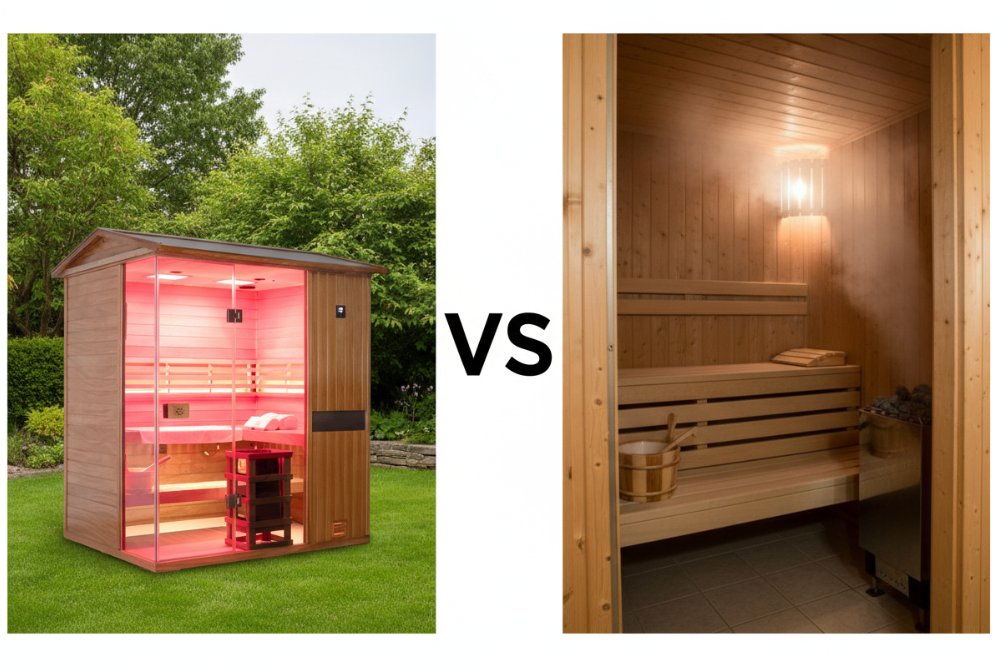
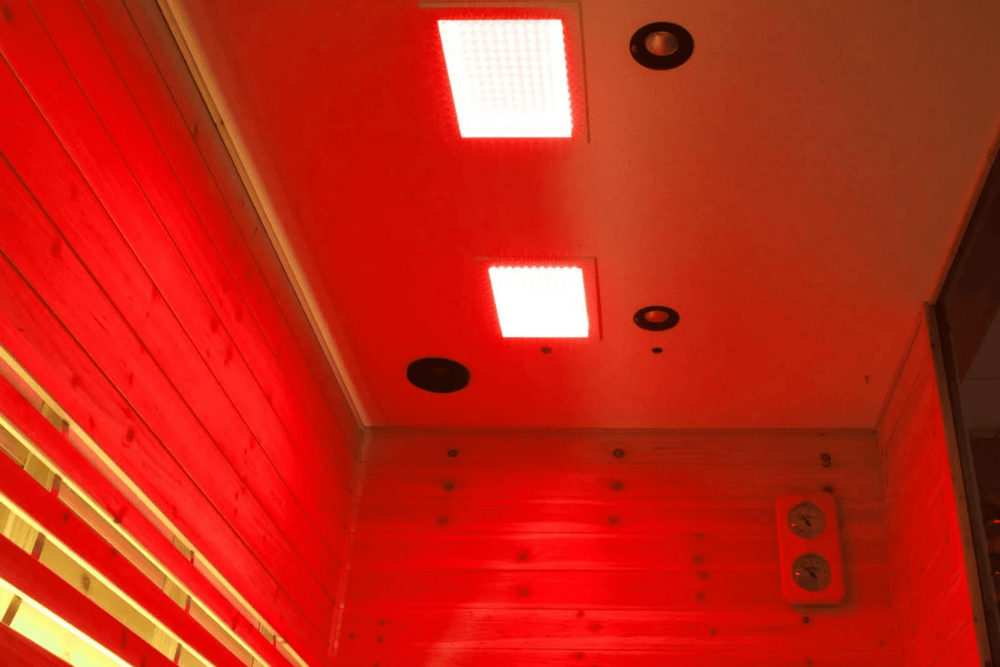
When most people think about a sauna, they think about heat first. That is natural—heat is the core of the sauna experience. But in a modern home sauna, comfort is not only about temperature. It is also about how the session feels, how the environment supports relaxation, and how thoughtfully different features work together.
That is where 660nm red light stands out.
Unlike the main heater in a steam sauna, 660nm red light is not there to make the cabin hotter. Instead, it adds a different kind of wellness-focused element to the session. In the photobiomodulation literature, red light in the approximate 620–700 nm range is commonly studied for skin-focused and cellular applications, making 660nm one of the best-known wavelengths in this category.
What Is 660nm Red Light?
660nm red light sits within the visible red-light spectrum and is widely discussed in photobiomodulation research. A 2024 review in the International Journal of Molecular Sciences describes photobiomodulation as a light-based approach that can modulate cellular functions and biological processes, and specifically reviews dermatology-focused applications of red and near-infrared light. The review also notes that outcomes can vary depending on wavelength, dose, treatment design, and device parameters.
In simple terms, that means 660nm red light is best understood as a complementary feature rather than a replacement for sauna heat. The sauna provides the warm, immersive environment. The red light adds a second layer—one associated with the broader science of light-based wellness and skin-focused care.
What Research Says About Red Light and Skin
One reason 660nm red light receives so much attention is its connection to skin-related photobiomodulation research.
A randomized controlled trial published in Dermatologic Surgery in 2017 evaluated 660 nm LED light for wrinkles and reported significant improvement in periocular wrinkles after 12 weeks of treatment. The study is indexed on PubMed as PMID: 28195844 and lists the DOI 10.1097/DSS.0000000000000981.
A 2023 open-access paper indexed in PubMed Central also describes red-light photobiomodulation as a light-based approach studied for visible signs of skin aging. That paper discusses proposed mechanisms such as mitochondrial ATP production, cell signaling, growth factor synthesis, and reduction of oxidative stress, while again showing that red-light research is generally discussed as a dose-dependent wellness or skin-care modality rather than a one-size-fits-all effect. It is indexed as PMID: 37522497, PMCID: PMC10311288, with DOI 10.1111/srt.13391.
For a sauna brand, the most accurate way to present this is not as a medical promise, but as a premium feature that aligns with a more skin-conscious and comfort-conscious wellness routine.
Why It Works So Well in a Steam Sauna Setting
A steam sauna already creates warmth, relaxation, and an immersive full-body environment. Sauna bathing has been reviewed in the cardiovascular literature for its links to circulatory and vascular responses, and a 2018 review in Mayo Clinic Proceedings summarizes evidence connecting sauna bathing with cardiovascular and other health outcomes. That review is indexed as PMID: 30077204 and DOI 10.1016/j.mayocp.2018.04.008.
660nm red light works differently. It is not simply another heating element. Instead, it adds a visible, light-based wellness component to the sauna session. Because sauna studies and red-light studies are usually conducted separately, the most careful way to describe their combination is this: the sauna provides the warm, enveloping heat, while the red light adds a second, more targeted layer to the experience. Together, they can make the session feel more complete, more intentional, and more refined. This is an evidence-informed interpretation based on the two separate research areas, rather than a claim from one combined clinical trial.
More Than Heat Alone
One of the easiest ways to understand the value of 660nm red light is to think of it as a feature that helps transform the sauna from a purely heat-based experience into a more layered wellness environment.
In a premium steam sauna, the goal is not only to reach a certain temperature. It is to create a setting that feels comfortable, immersive, and enjoyable enough to become part of a long-term routine. A built-in 660nm red light feature helps support that idea by adding a softer visual warmth and a wellness-centered design element that many customers associate with a more elevated session.
That distinction matters whether someone is shopping for compact indoor saunas for daily use or larger outdoor saunas for a more spacious setup. It changes the question from “How hot does it get?” to “How does the whole session feel?”
A Better Fit for Modern Home Wellness
Today’s sauna buyers often expect more than simple heat. They want a space that feels intentional, comfortable, and worth coming back to regularly. That is one reason why 660nm red light fits so naturally into a modern home sauna design.
It does not replace the role of heat. It enhances the atmosphere around it.
For customers comparing steam saunas, the appeal of 660nm red light is that it brings together visible design, comfort-focused wellness, and a feature already discussed in the scientific literature. The result is not just a hotter room—it is a more complete sauna experience.
If you’d like to explore models that combine steam comfort with integrated wellness-focused features, browse our steam saunas, compare our indoor saunas, or discover our outdoor saunas to find the right fit for your space.