When shopping for a home sauna, one of the most common questions people ask is simple:
Why does the temperature in some areas of the sauna differ from the control panel reading?
The answer is that sauna temperature is never completely static. It changes with the environment, heater performance, cabin size, airflow, and where the temperature is being measured. Whether you are using indoor saunas or outdoor saunas, the temperature inside the cabin is always dynamic rather than perfectly even.
HKXSC sauna heaters are designed to operate within a range of 95°F–230°F (35°C–110°C). The 230°F reading is the theoretical maximum temperature that may be reached under ideal conditions, with enough preheating time, stable voltage, minimal heat loss, and limited door opening during use. In real-life use, the final temperature often depends on the surrounding environment, installation conditions, and daily usage habits.
Why the Control Panel Reading Does Not Represent the Entire Sauna
One of the most important things to understand is how sauna temperature is measured.
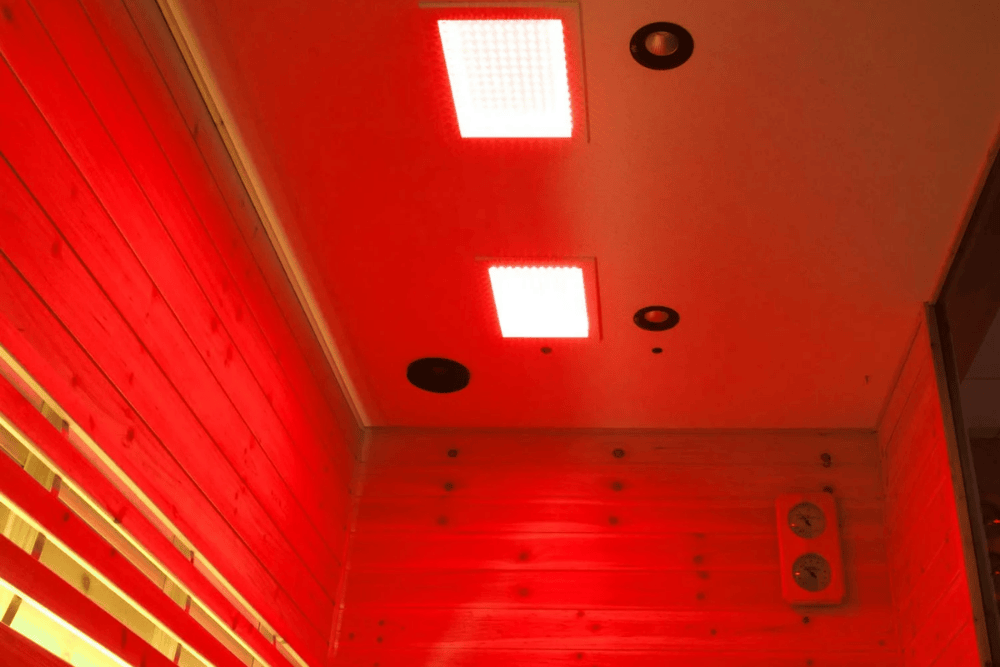
The sauna probe is installed in a fixed position inside the cabin, so the number shown on the control panel is simply the temperature at that exact probe location. It does not mean the entire sauna interior is at the same temperature.
For example, if the probe location reads 176°F, another area inside the sauna may be 158°F, even 194°F, depending on height, airflow, proximity to the heater, and heat circulation inside the room. This is normal. Sauna temperature naturally varies from one position to another, and the reading is best understood as a reference point rather than a uniform temperature for the whole cabin.
This is especially important when comparing larger steam saunas with smaller models. In any sauna cabin, heat rises, so the upper area is generally warmer than the lower area. Industry guidance commonly notes that temperatures can be much hotter near the ceiling and cooler near the floor because of vertical heat stratification.
Why Different Areas of the Sauna Feel Different
Inside a sauna, the temperature is always moving and redistributing. That means your actual experience depends a lot on where you sit.
If you are sitting closer to the top bench or closer to the heater, the air around you may feel hotter. If you are sitting lower or farther from the heat source, it may feel noticeably cooler. So even when the control panel shows a steady reading, different positions inside the sauna can still feel different at the same moment.
That is why sauna comfort is not only about the highest number on the display. It is more about finding the setting and seating position that gives you the heat level you personally enjoy.
Actual sauna heat-up time depends on several real-world factors, not just the maximum temperature.
1. Ambient temperature and installation environment
If the sauna starts in a colder environment, it will need more time to warm up. This is especially true for outdoor saunas in cooler weather. In a place like New York, where the outside temperature may be around 52°F / 11°C, heat loss happens much faster than in a warm indoor environment. Outdoor sauna manufacturers commonly note that colder weather increases heat loss and extends heat-up time.
2. Cabin size
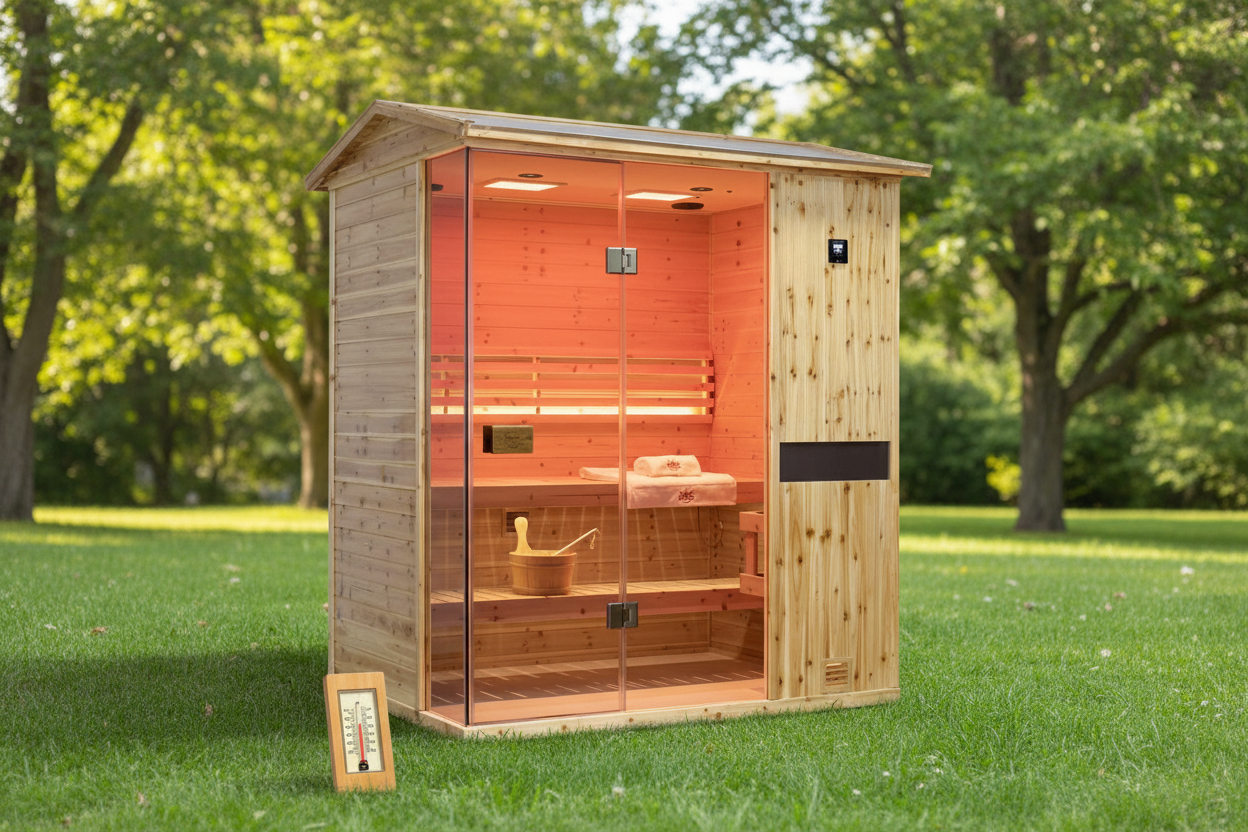
The larger the sauna, the more interior air volume the heater needs to warm. A larger multi-person sauna will usually take longer to heat than a compact unit. This is one reason why some larger outdoor saunas may feel slower to reach peak temperatures compared with smaller indoor saunas.
3. Glass surfaces and door gaps
Glass doors and window areas look premium, but they also allow heat to escape more easily than insulated wood walls. Door gaps, glass panels, and repeated door opening all contribute to heat loss, which reduces how quickly the sauna reaches its highest temperature. Some sauna sizing guidance even recommends compensating for extra heat loss through glass or doors when choosing heater capacity.
4. Voltage stability
Voltage consistency also matters. In the U.S., voltage fluctuation is not uncommon, and unstable voltage can affect heater output. Even when the unit is working normally, inconsistent power can slow heating performance or reduce the highest temperature reached in that session.
5. Door opening during use
Every time the door opens, hot air escapes and cooler air enters. That means the internal temperature curve becomes dynamic rather than steady. Frequent opening during preheating or during the session can make the sauna take longer to recover.
Is 150°F After One Hour Normal?
In many cases, yes.
If your sauna reaches around 150°F after one hour, especially in a cool environment, that usually indicates the heater is functioning normally. It may simply mean the sauna is working against real-world heat loss from the surrounding temperature, the size of the cabin, the glass area, or the frequency of door opening.
This is why the advertised peak temperature should always be understood as a best-case maximum, not a guaranteed number under every condition. The actual heating result depends on the environment, voltage, and usage habits.
How to Get the Best Sauna Experience
The goal is not necessarily to chase the highest possible number every time. The better approach is to understand how your sauna behaves and then adjust it to the heat level you actually enjoy.
Here are a few practical tips:
- Give the sauna enough preheating time, especially in cold weather
- Avoid opening the door too often during warm-up
- Be aware that the control panel reading reflects the probe location only
- Test different seating positions to find the most comfortable heat zone
- Once you know your preferred feel, use that as your regular setting going forward
Over time, most sauna owners naturally find the temperature setting that feels most comfortable for their routine.
Ready to explore further? Browse our steam saunas to discover designs, sizes, and features that suit your home and routine.